


SERVICES
Tuesday July 2, 2008
Doo Wop You Do To Me
Soulful Sounds: Glasvegas By Joe Kavanagh Several years back, the New Yorker magazine sought to define the essence of that maddeningly elusive, yet hugely important state of being: "cool". In their view, it has three central characteristics:
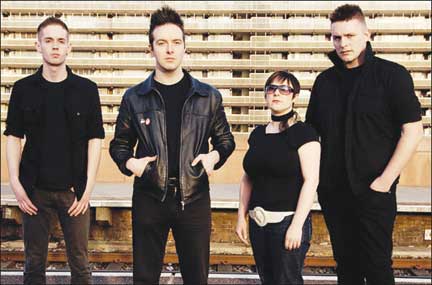
To be sure, this notion of being cool has attained an almost frightening currency in recent times, with kids being bullied at school for being "un-cool" or even being bullied because they are "too-cool" and, just to muddy the waters further, the lines between either state are both entirely subjective and can change without any obvious reason. We look at fashions from the past and wonder how people ever wore those clothes or that hairstyle, and then find ourselves doing exactly that when society suddenly decides that they are cool once again. Contrary to what many believe, the notion of coolness in this context is not a recent phenomenon, born around the same time as the concept of "teenagers" in the 1950s. Some historians trace its roots right back to the times of Aristotle, while in medieval times it was known as "sprezzatura" among the aristocratic classes, and even Abraham Lincoln is on the record as using the word "cool" in such a context during one of his speeches. It is not, however, an exaggeration to submit that today's materially and aesthetically obsessed society places more of an emphasis on the commodity of cool than any since mankind first invented the mirror. Although each of us no doubt knows someone savvy enough to anticipate trends and drop them before they lose their zest, coolest of all are those that make their own trends, often plowing their own lonely furrow in the face of ridicule or hostility, until one day the world suddenly sees what they have known all along. Glasvegas are such an act, having chosen a style of music that would not ordinarily prick up the ears of an ultra-cool indie brigade, were it not for the fact that it is so utterly beguiling. Glasvegas is one of the most appropriately named bands you will ever come across. The first syllable refers to their hometown of Glasgow, or more specifically, the area known as Dalmarnock, located in the city's tough East End, a portion of the city known more for the toughness of its residents, as opposed to any great musical legacy, which has traditionally emanated from the west side of the city. In fact, Glasvegas frontman, James Allan, readily admits that even he had absolutely no intention of ever becoming a musician during his youth. Like many kids in the area, he was convinced that his future lay in football, and he looked quizzically - and perhaps even a little contemptuously - at those that were brave enough to walk through the estates with an instrument strapped to their back. Like many kids growing up in working class areas in the UK, it was not until Oasis emerged on the scene in the mid-90s that Allan felt a deep connection with music. Like a generation beforehand when the Sex Pistols killed prog-rock by proving that you don't have to know any more than four chords to form a band, Oasis made kids across Europe feel that they too could be rock stars. Bitten by the bug, Allan and his cousin, Rab Allan, received presents of guitars as teenagers, unwittingly creating what would become the axis of their band, although it was not until very recently that they would refer to themselves as a band. Paul O'Donoghue (bass/vocals) was a longtime school friend, while the band's other member, Caroline McKay, was a friend that they made at a local clothing store who had no notion of playing drums until coaxed into doing so by the others. Initially, the four were not even considering forming a band in the traditional sense, but rather just socialized with each other, sometimes playing songs, sometimes just whiling the hours away drinking, chatting and listening to music, which brings us to the final two syllables of their name. All four members of the band are lovers of music from the 1950s and 60s, with Elvis obviously figuring amongst their favorite artists, and it was in tribute to him that they added the final part of their sobriquet. In contrast to many bands that pillage music from the past 40 or so years in an effort to create something new, Glasvegas looked backwards because they genuinely loved the music of artists such as Debbie Reynolds, Angela McCluskey and Jerry Lee Lewis, as well as orchestral, classical, doo-wop and even rockabilly music.
James Allan Giving It The Big One They made music without any kind of agenda, simplified and stripped down, because that was what practicalities dictated, with nary a care for what record labels or the media would think. They made music because it was fun, but with an honesty that infused everything from their lyrics to their melodies with an inordinate amount of soul. In October of 2006 the band made a tiny blip on the media radar with the self-financed, very-limited release of 7", 'Go Square Go', but perhaps the biggest event of the year arrived when the band played a gig in Glasgow venue, King Tut's. Sitting in the crowd on the night was music aficionado, Alan McGee, who was wholeheartedly blown away by the band's performance, later enthusing: "This amazing band are the sound of young Scotland, and the most exciting thing I've heard since the Jesus and Mary Chain in the 80s." A valid opinion given the fact that McGee actually managed the Jesus and Mary Chain, along with Oasis, Primal Scream and My Bloody Valentine, to name but a few. McGee has since become one of the band's most supportive and vocal proponents, obsessed to the point where he has been known to call James Allan in the middle of the night, just to ask him to explain some of his lyrics. ("Even my friends don't do that!" Allan recently deadpanned). The band's next single arrived in November of last year, in the form of the truly gorgeous 'Daddy's Gone', a powerful ode to loss as beautifully written and executed as anything from the days when acts like the Shangri Las and Shirelles roamed the land. It is a track of almost painful honesty, engaging melodies and an inherent sadness, given gritty life with Allan's heavily accented vocals and the critics loved it. It would eventually see the band appear on the BBC's famed and hugely influential Sound Of 2008 list and 'Daddy's Gone' was named the second best single of the year by NME, who also said: "If The Libertines defined the start of the decade and Arctic Monkeys its middle, then Glasvegas are almost certainly going to define its end. And beyond." Heady praise indeed but entirely warranted, given that the band continued their excellence with the release of another single, 'It's My Own Cheating Heart That Makes Me Cry', on Valentine's Day. Two weeks later they received the esteemed Phillip J. Hall NME Award for best new act. With shows selling out up and down the country and the media salivating at the prospect of their debut album, even though it's not due out until September/October, the members of Glasvegas were recently asked to describe their long term plans. Instead of throwing out the usual clichés about career progressions or wanting to continue to write great songs, the band simply answered that they wanted to remain as happy as they are now. Given their honesty and grounding, my guess is that they will not only remain happy but also make many other people happy along the way. Indeed, given their honesty and grounding, Glasvegas might just be cool enough to break at least the first of the New Yorker's three rules about cool. |


CURRENT ISSUE

RECENT ISSUES


SYNDICATE
[What is this?]
POWERED BY

HOSTED BY

Terms of Service | Privacy Policy
Website Design By C3I